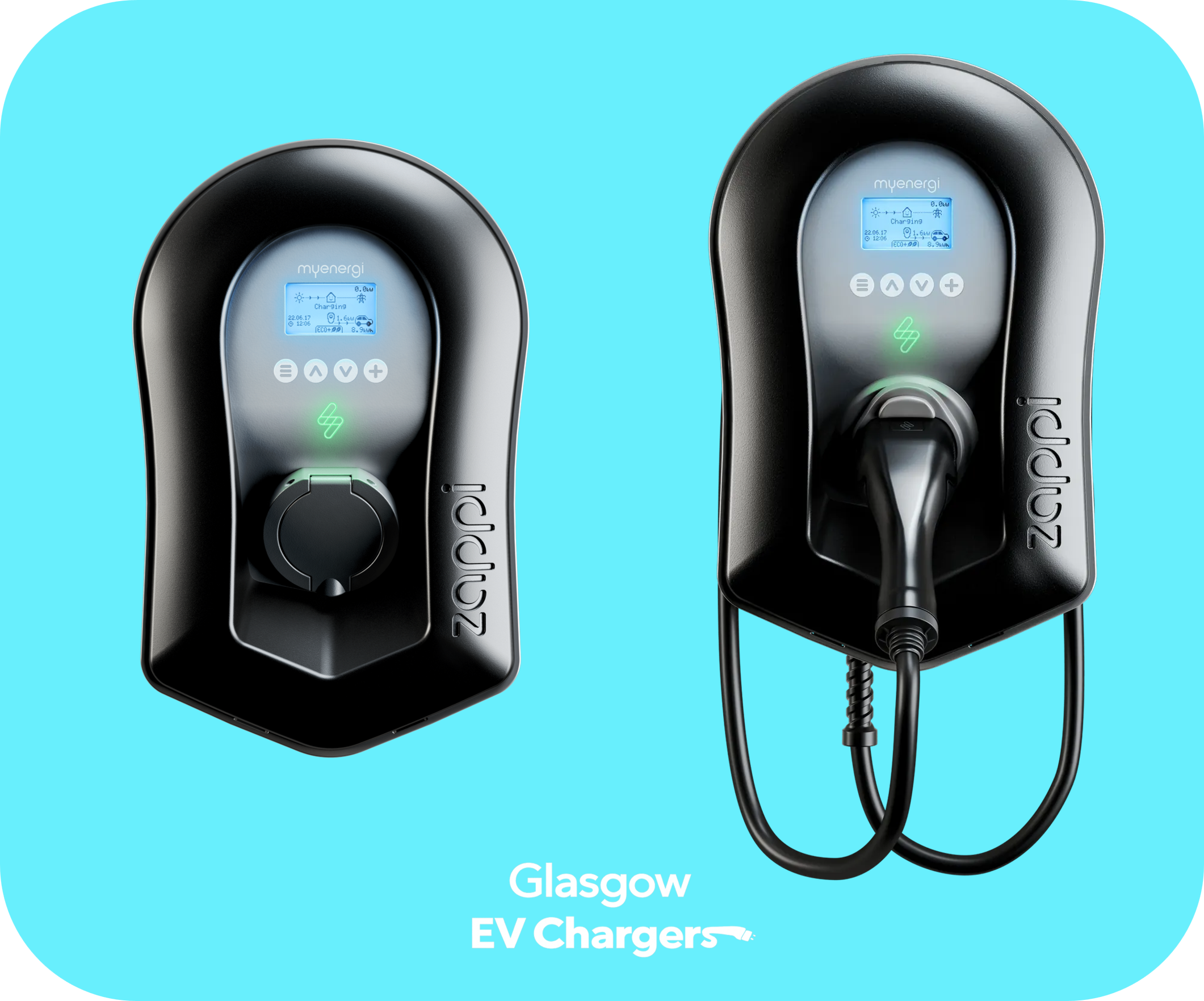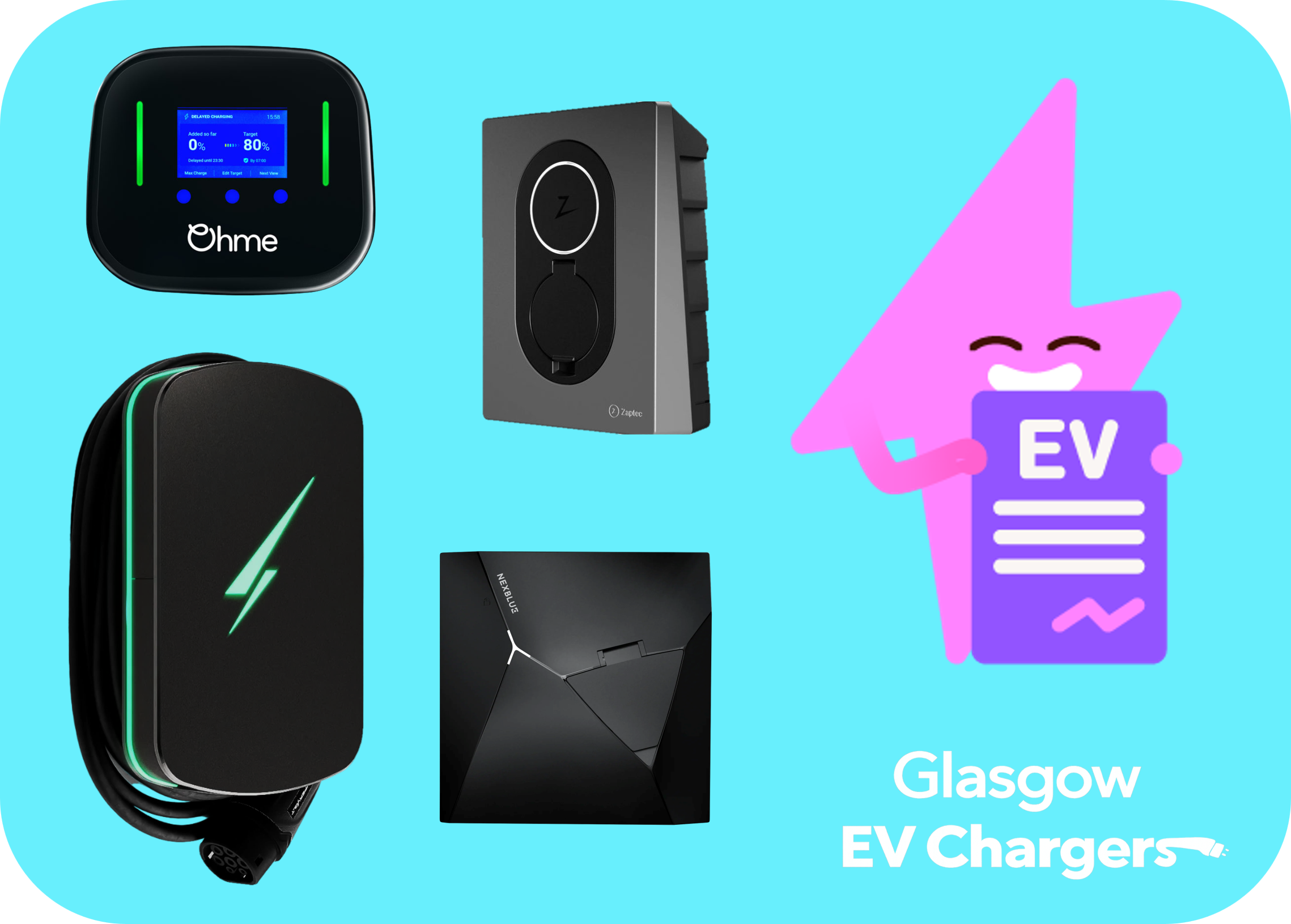
Short answer? Yes – basically every current home EV charger in the UK will charge most modern electric vehicles.
Whether you've just ordered a BYD Seal, Tesla Model Y, Mercedes EQA, Jaecoo 7, Chery Omoda, MG4, Kia EV6, Hyundai IONIQ 5, BMW i4, Audi Q4 e-tron or another electric vehicle, you don't need to buy a charger that's specific to your car.
One of the biggest misconceptions we hear from customers across Glasgow is that they need a "Tesla charger for a Tesla" or a "BYD charger for a BYD". Thankfully, that's not how home EV charging works...it's a lot simpler than that, and at Glasgow EV Chargers, we try to make it all as simple and efficient as possible - ensuring you get exactly the setup you need for your new electric vehicle.
A Tesla does not have to be connected to a Tesla Wall Connector; a BYD does not need a BYD-branded charger; a Mercedes does not need a Mercedes charger. Most modern electric cars use the same Type 2 connection for home charging, which means they can be charged using compatible units from brands such as Ohme, Hypervolt, Zappi, Zaptec, SyncEV, Tesla, Andersen, Project EV, Garo and others.
The more important decision is not whether the charger matches the badge on your car. It is whether the charger suits your property, parking position, energy tariff, preferred cable arrangement, solar setup and daily driving habits.
At Glasgow EV Chargers, we supply and install a wide range of home charging points across Glasgow and the surrounding areas. Simply tell us which electric vehicle you have, or which one you have ordered, and we can recommend suitable tethered and untethered chargers for your home.
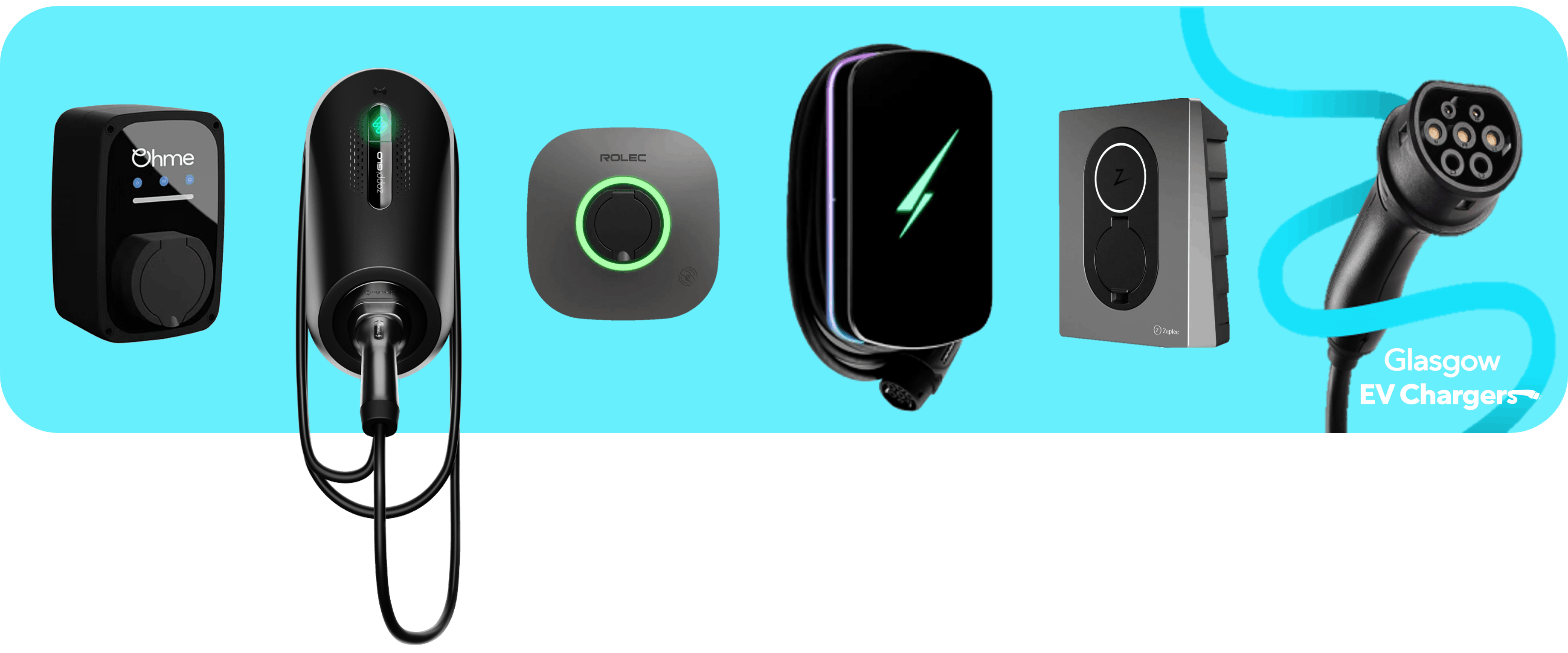
Why most modern Electric Cars use the same Home Charging connection
Home EV charging has become much more standardised than many new electric vehicle owners expect. Almost every modern electric car sold in the UK uses a Type 2 connection for AC charging. AC charging is the type normally used at home, at workplaces and at many destination charging points.
The Type 2 connector has seven contact points and is designed to transfer electricity safely between the charging point and the vehicle. It also allows the charger and car to communicate before charging begins. This communication confirms that the cable is connected properly, checks that the vehicle is ready to accept power and controls the charging session.
Because Type 2 has become the standard connection for modern electric vehicles in the UK and Europe, the same home charger can usually be used for cars from many different manufacturers.
A homeowner could install an Ohme charger while driving a Vauxhall, change to a BYD several years later and continue using the same charger. Another customer might install a Hypervolt for a Mercedes and later use it for a Tesla, BMW or Audi without replacing the charging point.
The charger does not need to be matched to one particular make of car. It simply needs to use the correct connection and be installed and configured properly.
What Is a Type 2 EV Charger?
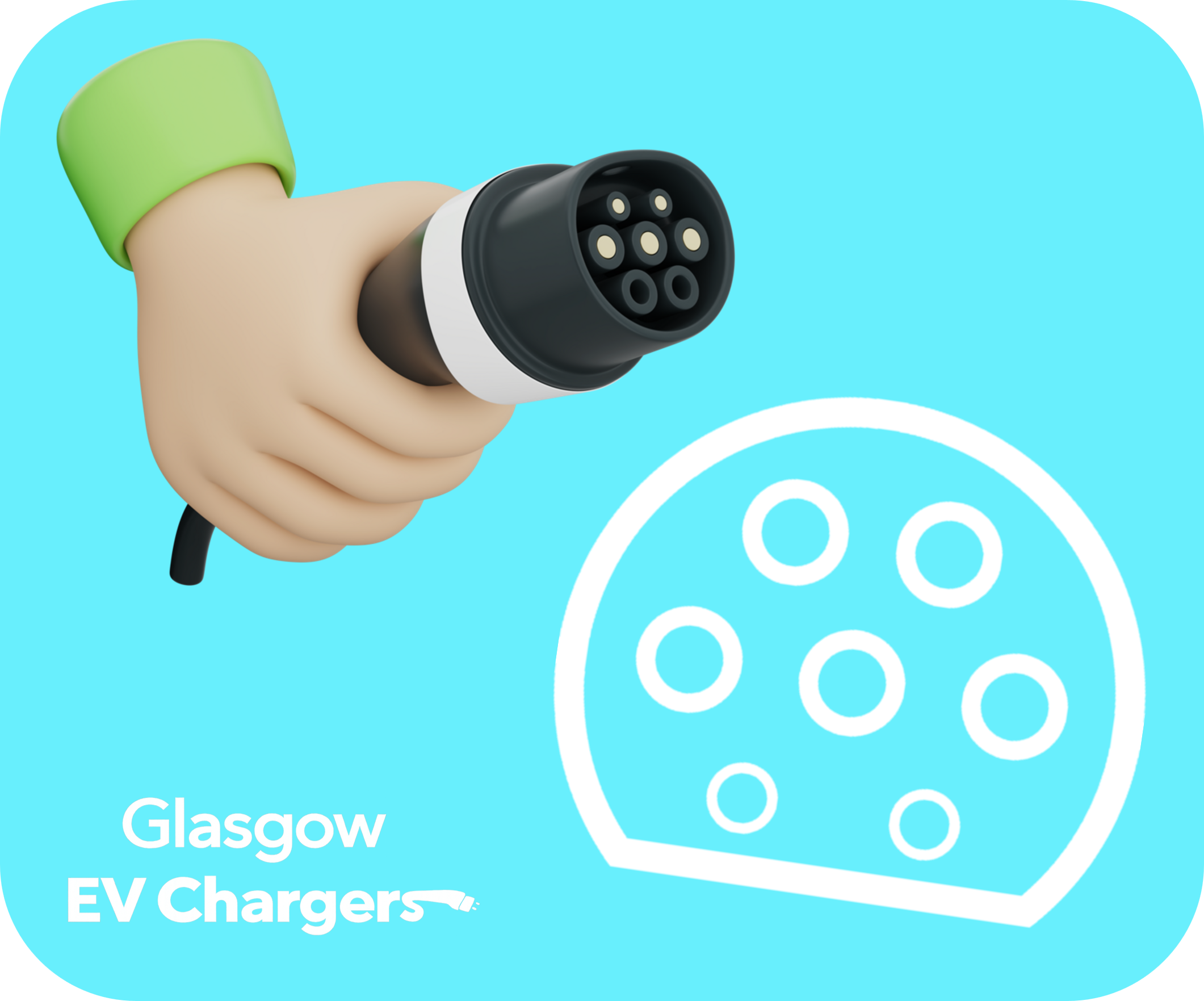
A Type 2 EV charger is a charging point designed to connect to the Type 2 AC charging socket fitted to most modern electric and plug-in hybrid vehicles.
You may see several different terms used online, including Type 2 charger, Mode 3 charger, home charging point, wallbox, smart EV charger and 7kW home charger. In most domestic installations, these terms are referring to broadly the same type of equipment: a permanently installed charging point connected to a dedicated electrical circuit at the property.
The charger may have its own permanently attached cable, known as a tethered charger, or it may have a socket into which a separate charging cable is connected, known as an untethered charger.
Both types can charge the same electric vehicles. The difference is mainly convenience and appearance rather than vehicle compatibility.
Which Electric Vehicles Can Use a Type 2 Home Charger?
A Type 2 home EV charger can charge almost every current electric vehicle and plug-in hybrid sold through mainstream manufacturers in the UK.
This includes vehicles from Tesla, BYD, Mercedes-Benz, BMW, Audi, Volkswagen, Skoda, Cupra, Vauxhall, Peugeot, Citroën, Fiat, Ford, Kia, Hyundai, Genesis, Volvo, Polestar, MG, Nissan, Renault, Toyota, Lexus, Honda, Mazda, MINI, Porsche, Jaguar, Land Rover, Jaecoo, Omoda, Chery and many others.
It also covers popular vehicles such as the Tesla Model 3 and Model Y, BYD Dolphin, Seal, Atto 3 and Sealion, Mercedes EQA, EQB and EQE, BMW i4, i5 and iX, Audi Q4 e-tron, Volkswagen ID.3, ID.4 and ID.7, Skoda Enyaq, Kia EV3, EV6, EV9 and Niro EV, Hyundai Kona Electric, IONIQ 5 and IONIQ 6, MG4, Vauxhall Corsa Electric, Mokka Electric and Astra Electric, Peugeot e-208 and e-2008, Nissan Leaf and Ariya, Renault Megane E-Tech, Ford Mustang Mach-E and Explorer EV, Volvo EX30, EX40 and EC40, as well as a growing number of electric models from Jaecoo, Omoda and other new manufacturers.
Will an Ohme Charger Work With a Tesla, BYD or Mercedes?
Yes. An Ohme charger can charge modern Type 2 vehicles from Tesla, BYD, Mercedes-Benz, BMW, Audi, Volkswagen, Vauxhall, MG, Kia, Hyundai, Ford, Volvo, Polestar, Peugeot, Nissan, Renault, Jaecoo, Omoda and many other manufacturers.
The same principle applies to most other leading home charger brands. A Hypervolt is not limited to one manufacturer; a Zappi can charge vehicles from many different brands; a Zaptec Go can be used when you change cars; a Tesla Wall Connector can also charge compatible non-Tesla vehicles.
There can be differences in smart features, apps, tariff integration and how a charger communicates with a particular vehicle or energy provider, but the physical Type 2 charging connection is widely compatible.
This is why choosing the best home EV charger is normally more about the charger’s features than the make of car parked outside.
For example, someone with an off-peak electricity tariff may prioritise a charger with strong tariff scheduling. A homeowner with solar panels may prefer a charger designed to make use of surplus solar generation. Someone with a newly renovated property may place more importance on the appearance of the charger and how neatly the cable can be stored.
The correct charger depends on how you want to charge, not simply what you drive.
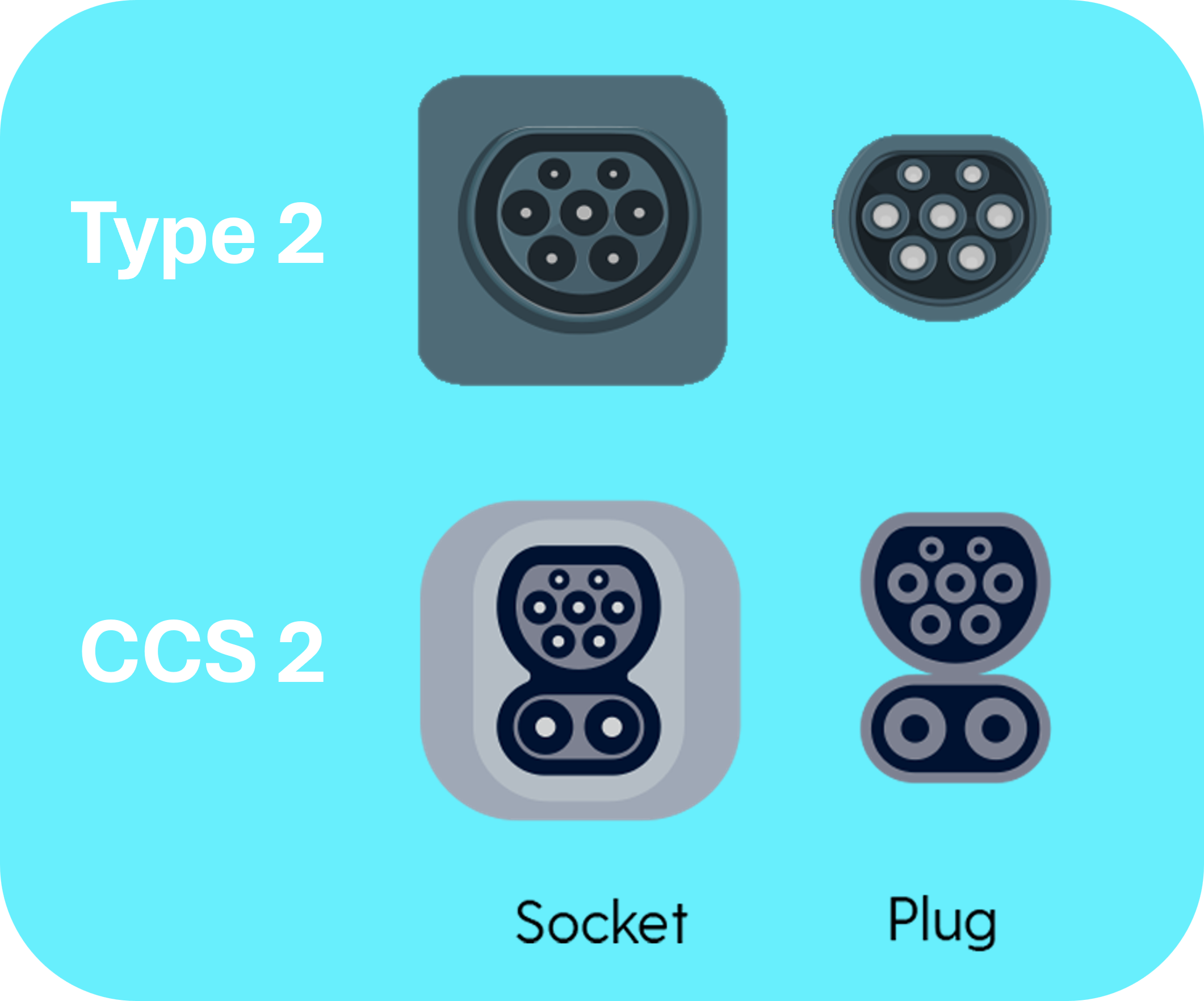
What Is the Difference Between Type 2 and CCS?
Type 2 and CCS are sometimes confused because the charging sockets can look similar.
Type 2 is normally used for AC charging, including charging at home. CCS is generally used for high-powered DC rapid charging at motorway services, public charging hubs and other commercial locations.
A CCS charging socket includes the Type 2 section at the top, with two additional large DC connections underneath. At home, the Type 2 section is used. At a rapid public charger, the larger CCS connector uses the complete socket, including the two lower DC contacts.
You do not need a CCS charger installed at home. Standard domestic EV charger installations use AC charging, normally through a Type 2 connection.
The vehicle itself converts the AC electricity from your home charger into DC electricity for the battery. At a public rapid charger, that conversion is carried out by the charging equipment, allowing DC electricity to be delivered directly to the vehicle battery at a much higher power.
This is one reason rapid public chargers are larger and considerably more expensive than domestic charging points.
Does Every Electric Car Charge at the Same Speed?
No. Although most modern EVs use the same Type 2 connection, they do not all charge at exactly the same speed.
A typical single-phase home EV charger in the UK can provide up to approximately 7kW or 7.4kW. However, the vehicle’s onboard charger determines how much AC power it can accept.
If a home charger can provide 7.4kW but the vehicle can only accept 3.6kW through its onboard AC charger, the vehicle will charge at approximately 3.6kW. The charger does not force more power into the car than it can safely accept.
Equally, a vehicle advertised as being capable of very fast charging may only achieve its highest figure at a compatible public DC rapid charger. A car that can accept 150kW or 250kW on a public rapid charger will not charge at that speed from a domestic 7kW wallbox.
For most Glasgow homes with a standard single-phase electricity supply, a 7kW or 7.4kW charger provides the most practical domestic charging speed. It is usually sufficient to replenish a substantial amount of driving range overnight.
Some properties have a three-phase electricity supply and may be suitable for an 11kW or 22kW charging point. However, the vehicle must also support the relevant three-phase AC charging speed. Installing a 22kW charger does not mean every car will charge at 22kW.
Before recommending a higher-powered charger, the property’s supply, maximum demand, cable route, distribution equipment and the vehicle’s onboard charging capability all need to be considered.
Is a 7kW Home Charger Suitable for Every EV?
A 7kW home charger is suitable for the vast majority of electric vehicles used at residential properties.
Battery sizes vary considerably, but most drivers do not arrive home with a completely empty battery every evening. In normal use, the charger only needs to replace the electricity consumed during that day’s driving.
For example, someone who drives around Glasgow and the surrounding areas for commuting, shopping and local appointments may only need to replace a portion of the battery overnight. A correctly installed 7kW charger can usually handle this comfortably.
Even vehicles with large batteries can be charged effectively at 7kW. A full charge may take longer, but most owners schedule the vehicle to charge overnight during cheaper off-peak periods rather than waiting for the entire battery to fill from zero.
The most appropriate charger power should be based on the property’s electrical supply, the vehicle, the customer’s mileage and when charging will normally take place.
Does the Charger Brand Affect Vehicle Compatibility?
The brand does not normally affect basic Type 2 compatibility, but it can affect the overall charging experience.
Different charger manufacturers offer different apps, controls, designs, cable arrangements and smart charging features. Some chargers integrate particularly well with certain electricity tariffs. Others are designed around solar charging, simple plug-and-charge operation or premium appearance.
Ohme chargers are popular with customers who want strong smart-tariff functionality and automatic charging schedules. Hypervolt chargers are known for their design, app controls and tethered convenience. Zappi is commonly considered by homeowners with solar panels or plans for renewable generation. Zaptec offers a compact and modern untethered option. SyncEV provides smaller charging units suited to customers who prefer a discreet installation. Andersen chargers are often chosen where appearance and concealed cable storage are major priorities. Tesla Wall Connectors are popular with Tesla owners but can also charge many compatible non-Tesla Type 2 vehicles.
The best EV charger for your home may therefore depend on your electricity tariff, solar panels, parking arrangement, cable length, preferred app and budget.
Vehicle compatibility is important, but it is only one part of the decision.
Tethered or Untethered: Which Works With More Electric Vehicles?
Both tethered and untethered Type 2 chargers work with the same range of modern Type 2 electric vehicles.
A tethered charger has its cable permanently connected to the charging unit. You park the vehicle, unwind the cable and plug it into the car. It is quick and convenient, particularly for drivers who charge frequently.
An untethered charger has a Type 2 socket rather than a permanently attached cable. You connect a separate charging cable between the charger and the car. When charging is complete, the cable can be removed and stored in the vehicle, garage or house.
Neither design is inherently more compatible with modern electric cars. The choice comes down to convenience, appearance and flexibility.
A tethered charger is often preferred by customers who want the quickest possible daily routine. There is no need to take a charging cable out of the boot each time the car is charged.
An untethered charger can look tidier when it is not in use because there is no permanent cable hanging beside it. It may also provide additional flexibility if the household later needs a cable of a different length or owns an older vehicle requiring a different cable arrangement.
For most new EV owners, both options will work. The question is which one will suit the driveway and the way the charger is used.
Can One Home Charger Be Used for Two Different Electric Cars?
Yes. One Type 2 home charger can normally be shared between different compatible electric vehicles.
A household could use the same charger for a Tesla and a Mercedes, a BYD and a Vauxhall, or a Kia and an MG. The cars do not need to be from the same manufacturer. Only one car can normally be connected to a standard single-socket charger at a time, but the vehicles can take turns charging. For many two-car households, this works perfectly well because both vehicles do not need a full charge every night. Where two cars need to charge regularly at the same time, other options may be considered. These can include two separate charging points with load management, a suitable multi-vehicle charging arrangement or a carefully planned charging schedule.
Your home's available electrical capacity should be checked before installing multiple chargers. Load balancing can help prevent the combined demand from exceeding what the property supply can safely support.
Will the Charger Still Work When You Change Your Car?
In most cases, yes. Installing a Type 2 home charger is not the same as installing an accessory that only works with one vehicle. The charger becomes part of the property’s electrical installation and can normally continue to be used when the homeowner changes to another modern Type 2 electric vehicle. Someone could install a charger whilst owning a Tesla Model 3, then change to a BYD Seal, Mercedes EQE, BMW i4 or Vauxhall Astra Electric without replacing the charger.
The new vehicle may have a different battery size and may support a different maximum charging speed, but it should still be able to connect to the same Type 2 home charging point. This is worth considering when choosing between tethered and untethered charging, cable lengths and smart features. The installation should work for the vehicle you have now while remaining practical for vehicles you may own in the future.
Do Plug-In Hybrid Cars Use the Same Home Chargers?
Most modern plug-in hybrid electric vehicles also use a Type 2 connection for AC charging.
This means a home charger installed for a fully electric vehicle can often charge a compatible plug-in hybrid, and the same charger may remain suitable if the owner later changes from a plug-in hybrid to a fully electric car.
Plug-in hybrids usually have smaller batteries than fully electric vehicles and may accept a lower AC charging rate. Connecting a plug-in hybrid to a 7kW charging point does not guarantee it will draw the full 7kW. The vehicle controls the amount of power it accepts.
Despite the smaller battery, a home charging point can still be worthwhile for a plug-in hybrid. It allows the vehicle to be charged safely and conveniently at home, helping the owner make greater use of its electric range rather than relying on the petrol engine.
Can You Use a Tesla Wall Connector With a Non-Tesla EV?
Many modern non-Tesla vehicles with a compatible Type 2 connection can use a Tesla Wall Connector. The charger should be configured correctly during installation, and the vehicle must support the relevant connection and charging method. However, a Tesla-branded charger is not necessarily restricted to Tesla vehicles. Similarly, Tesla vehicles can be charged using many non-Tesla home charger brands, including Ohme, Hypervolt, Zappi, Zaptec and other Type 2 charging points. Some Tesla owners choose a Tesla Wall Connector because they like its design and integration with the vehicle. Others choose a different brand because they prioritise tariff controls, solar compatibility, cable length or app functionality.
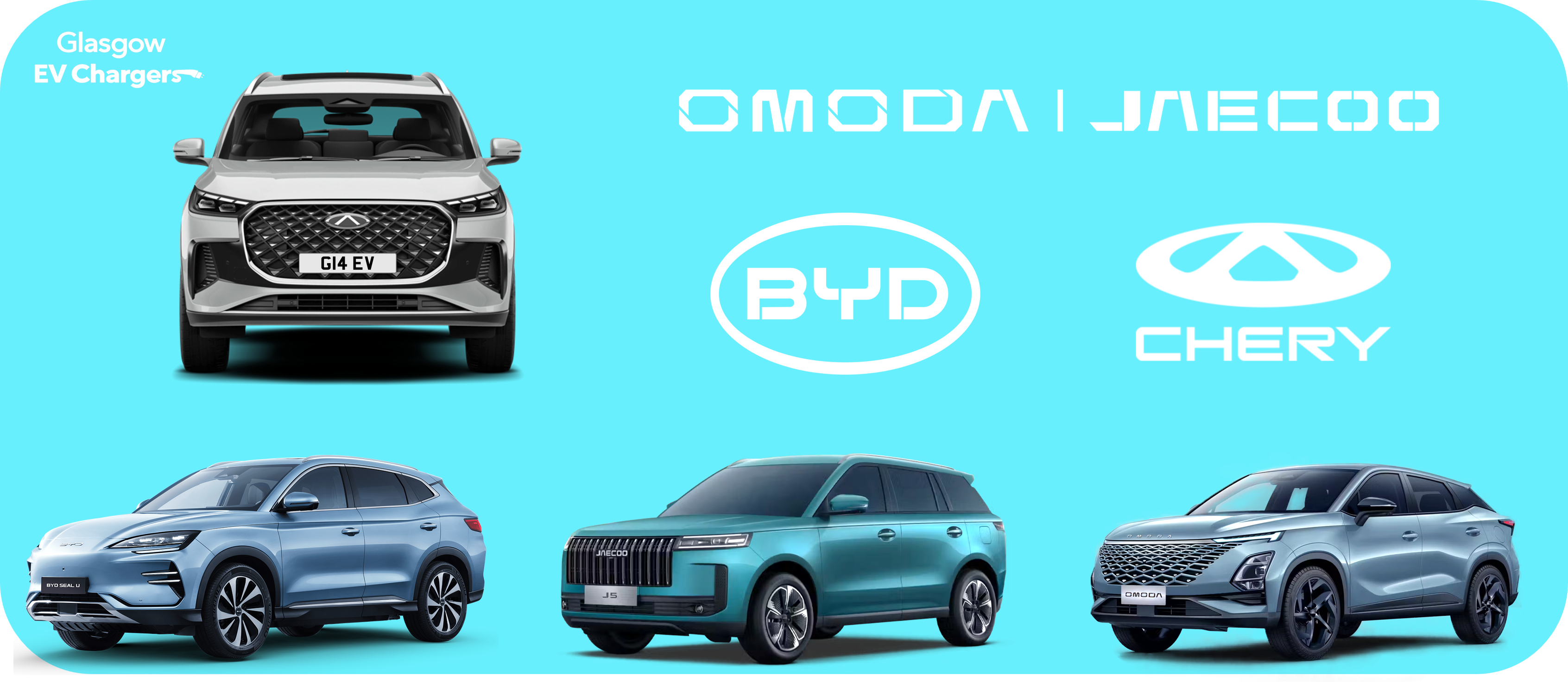
Which Home Charger Is Best for a BYD, Jaecoo, Omoda or Chery Vehicle?
Drivers buying vehicles from newer manufacturers often ask whether they need a specialist charging point. In most cases, they do not. Modern electric and plug-in hybrid vehicles from manufacturers such as BYD, Jaecoo, Omoda and Chery use standardised charging connections designed to work with widely available home charging equipment.
A BYD owner can choose from the same leading charger brands as a Tesla, Mercedes or BMW owner. The decision should be based on charging features, electricity tariffs, solar compatibility, cable arrangement and installation requirements. The same applies to customers who are unfamiliar with the charger market. You do not need to choose a unit before requesting an installation quote.
Tell us which car you have, where it will be parked and what features matter to you. We can then explain the suitable options without tying you to one manufacturer.
What Should You Consider When Choosing a Home EV Charger?
Compatibility should be confirmed, but once a vehicle has a standard Type 2 connection, there are several more useful questions to ask.
Think about where the car will be parked in relation to the charger; whether a 5-metre, 7.5-metre or longer cable may be required; whether you want the cable permanently attached; whether the charger needs to work with a particular off-peak electricity tariff; whether the property has solar panels; whether another electric vehicle may be added in future; and whether the appearance of the charger is important.
The cable route through the property also matters. Some homes have a straightforward route from the consumer unit to the driveway. Others require underfloor access, an external armoured cable route, a detached garage supply, a post-mounted charger or cabling beneath a driveway. Choosing a charger without first considering the installation can lead to unnecessary difficulties. A home survey, property photographs or a detailed discussion with an installer can help identify the most practical solution.
Can You Buy a Charger Before Arranging Installation?
You can, but it is often better to speak to an EV charger installer first. Some customers buy a charging point online because it appears to be discounted, then discover that it is unsuitable for their preferred cable route, energy tariff, solar setup or parking position. There may also be questions around warranty support, manufacturer commissioning, app setup, electrical protection and compatibility with the installation method. In discussing the property and vehicle before purchasing the charger, you can choose a unit that works for both the car and the home.
At Glasgow EV Chargers, we stock and install a wide range of major home charger brands. You can tell us which vehicle you have and whether there are any features you particularly want. We can then recommend suitable options and provide a clear installation quotation.
Why Professional EV Charger Installation Matters
The charger may be compatible with the car, but it must also be compatible with the property’s electrical installation. A home EV charger is a high-powered electrical appliance that can operate continuously for several hours. It requires a dedicated circuit, suitable protective equipment, appropriate cable sizing and consideration of the property’s earthing arrangement and overall electrical demand.
The consumer unit, main fuse, existing loads, cable route and charging-point location should all be assessed. Some installations may require load management to prevent the charger from drawing excessive power when other high-demand appliances are operating. Others may involve a separate EV consumer unit, additional surge protection, PEN fault protection or communication with the local electricity network operator. The charger also needs to be correctly commissioned and configured. Smart schedules, maximum current limits, tariff settings and app connectivity may all need to be established before the vehicle is charged.
A professional home EV charger installation is therefore about more than fixing the unit to a wall and connecting three wires. The complete system needs to be safe, practical and suitable for long-term use.
.png)
Home EV Charger Installation throughout Glasgow
Homes across Glasgow and the surrounding areas vary considerably, and the correct installation approach depends on the property.
A modern home with a consumer unit close to the driveway may allow for a relatively straightforward cable route. A sandstone property in Glasgow’s Southside or West End may require a more discreet route through floors, basements or external areas. A detached house in Newton Mearns, Bearsden or Bothwell may need a longer cable run to reach a garage, gatepost or parking bay. A converted property in Paisley or Pollokshields may involve shared access, allocated parking or additional planning around the cable route.
This is why the best home charger installation is not simply based on the vehicle model.
The charger needs to suit the property, the available electrical supply, the parking arrangement and the customer’s preferred appearance.
We carry out EV charger installations across Glasgow, East Renfrewshire, Renfrewshire, East Dunbartonshire, Lanarkshire and Ayrshire, covering straightforward driveway installations as well as longer cable runs, detached garages, post-mounted charging points and more complex properties.
How to Tell Which Charger Will Work With Your Electric Car
The easiest option is to tell us the make, model and approximate age of the vehicle. For a modern UK electric car, we can usually confirm quickly that it uses a Type 2 connection. We can then focus on selecting the most suitable charger and cable arrangement. It's also helpful to know where the vehicle will be parked; where the consumer unit is located; whether the property has solar panels; which electricity provider or tariff you use; and whether you prefer tethered or untethered charging. For many quotes we provide, photographs of the consumer unit, electricity meter, proposed charger position and cable route are enough to provide an initial assessment. More complex properties or installations can benefit from a site survey.
You do not need to understand every technical detail before contacting an installer. Simply tell us which EV you have and what you would like the charger to do.
Frequently Asked Questions About EV Charger Compatibility
Do all electric cars have the same charging plug?
Most modern electric cars sold in the UK use a Type 2 connection for home AC charging. Some older vehicles and imports use Type 1, so the vehicle’s age and specification should be checked if it is not a current model.
Can any electrician install an EV charger?
EV charger installation requires appropriate knowledge of dedicated charging circuits, protective devices, earthing arrangements, load management and charging-point commissioning. It is sensible to use an experienced EV charger installer who understands the relevant equipment and installation requirements, has their Level 3 EV Installation qualification and is an Approved Installer of the brand being installed.
Can I use an Ohme charger with any car?
Ohme chargers work with a wide range of modern Type 2 electric and plug-in hybrid vehicles. Certain smart features may depend on the vehicle, charger model, energy tariff or app connection, but basic Type 2 charging is widely compatible.
Can I charge a Tesla with a Zappi, Hypervolt or Ohme charger?
Yes. Modern Tesla vehicles can be charged using compatible Type 2 home chargers from Zappi, Hypervolt, Ohme and other manufacturers.
Can a Tesla Wall Connector charge a non-Tesla?
Many compatible Type 2 non-Tesla vehicles can use a Tesla Wall Connector when the unit is correctly installed and configured.
Will a 7kW charger work with a car that only accepts 3.6kW?
Yes. The car will limit the charging rate to the amount its onboard charger can accept. A 7kW charger does not force the full output into the vehicle.
Do I need a different charger if I buy a new car?
Usually not. If both the old and new vehicles use Type 2 AC charging, the existing home charger should normally remain compatible.
Is an untethered charger more future-proof?
An untethered charger can offer flexibility because the cable is removable and can be replaced if a different length or connection is needed. However, a modern tethered Type 2 charger should also remain suitable for most new electric vehicles for many years.
Can one charger be shared between two different car brands?
Yes. The same compatible Type 2 home charger can be used for different vehicle brands, although a standard charger will normally charge one vehicle at a time.
Does every charger work with solar panels?
No. Although most chargers can use electricity generated by the property, only certain models offer dedicated controls designed to prioritise or manage surplus solar energy. If solar charging is important, this should be considered when choosing the unit.
Choosing the Right EV Charger for Your New Car
So, do all home EV chargers work with every electric vehicle?
For almost every modern electric vehicle sold in the UK, the answer is broadly yes. Type 2 has become the standard connection for home AC charging, allowing cars from different manufacturers to use the same charging equipment.
There are exceptions involving some older vehicles, imports and Type 1 connections, but these can normally be identified before installation.
The bigger decision is choosing a charger that suits how you live. You may want automatic charging during cheaper overnight periods, solar integration, a permanently attached cable, a compact socket-only design, a long charging cable or an app that is particularly easy to use.
At Glasgow EV Chargers, we stock and install home charging points from leading charger manufacturers, suitable for vehicles from Tesla, BYD, Mercedes-Benz, BMW, Audi, Volkswagen, Vauxhall, Ford, Kia, Hyundai, MG, Volvo, Polestar, Nissan, Renault, Peugeot, Jaecoo, Omoda, Chery and many others.
You do not need to decide on the charger before contacting us. Tell us which electric vehicle you have, or which one is arriving, and we will recommend suitable options based on your car, property, energy tariff and preferred charging setup.
For professional home EV charger installation in Glasgow and the surrounding areas, contact Glasgow EV Chargers for a free, no-obligation quote.
Frequently Asked Questions About EV Charger Compatibility
For almost every modern electric vehicle sold in the UK, the answer is broadly yes. Type 2 has become the standard connection for home AC charging, allowing cars from different manufacturers to use the same charging equipment. There are exceptions involving some older vehicles, imports, and Type 1 connections, but these can normally be identified before installation. The bigger decision is choosing a charger that suits how you live. You may want automatic charging during cheaper overnight periods, solar integration, a permanently attached cable, a compact socket-only design, a long charging cable or an app that is particularly easy to use.
Do all electric cars have the same charging plug?
Most modern electric cars sold in the UK use a Type 2 connection for home AC charging. Some older vehicles and imports use Type 1, so the vehicle’s age and specification should be checked if it is not a current model.
Can any electrician install an EV Charger?
EV charger installation requires appropriate knowledge of dedicated charging circuits, protective devices, earthing arrangements, load management, and EV Charger commissioning. It is sensible to use an experienced EV charger installer who understands the relevant equipment and installation requirements, has their Level 3 EV Installation qualification, and is an Approved Installer of the brand being installed.
Is an untethered charger more future-proof?
An untethered charger can offer flexibility because the cable is removable and can be replaced if a different length or connection is needed. However, a modern tethered Type 2 charger should also remain suitable for most new electric vehicles for many years.
Does every charger work with solar panels?
No. Although most chargers can use electricity generated by the property, only certain models offer dedicated controls designed to prioritise or manage surplus solar energy. If solar charging is important, this should be considered when choosing the unit. We'll take all of this down during the survey, whether remote or visiting, and factor it into the options offered, should you wish to have a solar-integrated EV charger installed.
Other blogs
What's happening
Our latest news and trending topics